


Barring any trades before Friday, the Nashville Predators will draft 10th overall at the 2026 NHL Entry Draft. Chris MacFarland’s first pick is a critical one, not just because it’s a lottery selection, but because it will set the tone for how this franchise thinks it can contend again. With that in mind, below are five prospects I like in the first round.
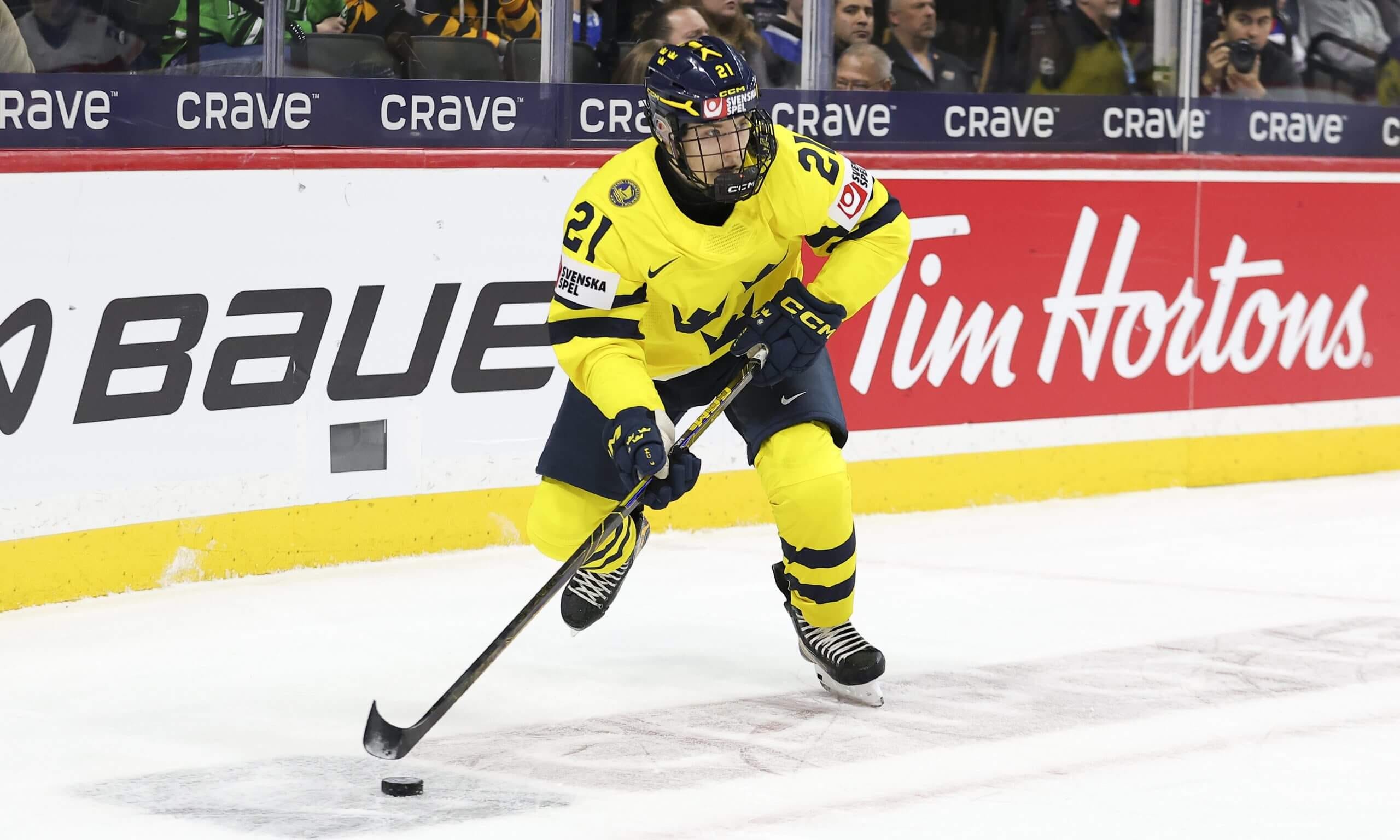
Viggo Björck (F) | Djurgårdens IF | SHL
Let’s get this out of the way first: everyone knows about Viggo Björck’s size. At 5’9”, there’s a natural hesitation to draft the Swedish forward highly, but at this juncture, Nashville should throw those concerns out the window.
Björck turned heads two seasons ago at the U18 level in Sweden before firmly establishing his name in the 2026 lottery conversation with 74 points in 42 games as a 16-year-old playing U20 hockey last year. Fast forward to the 2025-26 season, Björck debuted in the SHL, played top-six minutes, notched nine points in seven games at the World Junior Championship (WJC), and earned an important role on Team Sweden at the World Championship.
I understand that not many 5’9” forwards (especially centers) become NHL stars, but I can’t deny what I’ve seen on film. Björck is a fluid skater; he doesn’t have elite speed but never stops moving his feet, powering through checks to maintain possession. He’s constantly exploiting open ice, finding passing lanes in transition, or hiding behind defenders to tap in backdoor goals. Björck is immensely cerebral and has the skill to be a top-of-the-lineup playmaker in the NHL. He reads the game extremely well in all three zones, uses good timing to create pressure and opportunities, and doesn’t get enough credit for his scoring touch.
I’m not confident Björck will be available at ten, but if he is, it’s worth the risk for Nashville.
Wyatt Cullen (F) | U.S. National Team Development Program | USHL
The son of former Predator Matt Cullen, Wyatt was a bright spot in an otherwise forgettable U.S. NTDP season. In 40 games with the program, Cullen scored 16 goals and 45 points and added another nine points in five games at the U18 WJC.
One of the youngest players in this class, Cullen is nothing if not creative. If you watch just a few shifts, you’ll see eye-popping puck skills, shifty dekes, and impressive passing. He won’t necessarily be your top forechecker or your best defensive forward, but his vision with the puck is top-notch, and his transition skills are noticeable.
Cullen is a good but not great skater who relies on delays, turns, feints, and more to beat defenders, complete difficult passes, and pick corners with his strong shooting skills. If he can’t find his way to a high-danger scoring area, he’s likely to find a pass there instead. Cullen isn’t perfect in his playmaking, but his trial-and-error puck-handling should smooth out with development, and the skill is a great foundation for filling out other aspects of his game.
Malte Gustafsson (D) | HV71 | SHL
The brother of Predators prospect Viggo, Malte Gustafsson should be the third — fifth defender off the board on Friday night. The Sharks adding another top-ten pick suggests they’ll take a defender at nine (or two), but the wildcard of Keaton Verhoeff remains. Regardless, Gustafsson would be my choice amongst defenders likely available at ten.
The 18-year-old blueliner is already 6’4” and 200 pounds and has spent the past few seasons in the HV71 system with his brother. Last year, he posted 12 points in 19 U20 games and added three assists in his first 27 SHL contests; on top of that, he was nearly a point-per-game player at the U18 WJC for Team Sweden.
Gustafsson is as sound as they come and would be a nice complement to the likes of Cameron Reid, Tanner Molendyk, and Ryan Ufko. Given his size, Gustafsson’s footwork and skating strides are strong; as the season progressed, he worked in a robust arsenal of dekes to beat forecheckers and connect his first passes. His defensive positioning is consistent from shift to shift, and he pairs stickwork with smart physicality to force turnovers and pressure opponents out of high-danger areas. Gustafsson doesn’t have the best accelerating gear, but he can recover well and rarely puts himself in harm’s way. His puck decisions improved across the year as he developed into a strong two-way bet.
Ryan Lin (D) | Vancouver Giants | WHL
The opposite of Malte Gustafsson, Ryan Lin is a 5’11” defender coming out of the WHL; in 53 games with the Vancouver Giants, Lin posted 14 goals and 57 points.
Lin is defined by his shiftiness, puck skills, and offensive instinct. His understanding of player movements and awareness of passing opportunities give his offensive game a buttery quality. At his best, Lin thrives with give-and-go touches, needle-threading passes to the slot, and quick hands to cast aside opponents. He moves okay without being an elite skater and enjoys jumping into (if not leading) his team’s transition.
Defensively, Lin maintains good positioning with strong backward skating strides. He works hard to keep himself between his man and the net and fights to win every puck battle. Despite that, Lin’s game isn’t without errors. He can be careless with his passing at times, and his lack of top-end speed can hinder his recovery when caught up the ice or in separating from some forecheckers. I have questions about how much he can score in the NHL, but the University of Denver is as good a place as any to develop a top-four pro blueliner.
Oscar Hemming (F) | Boston College | NCAA
I don’t expect Nashville to take Oscar Hemming tenth overall, but I don’t think it’s a crazy idea either. Hemming had a disastrous year off the ice, which prevented him from playing for a big chunk of the calendar. Contract disputes saw him bounce between Finland, the OHL, the BCHL, and eventually, college hockey. In 19 games with the BC Eagles, Hemming scored one goal and eight points.
That’s not a stat line for a top-ten pick, but it’s hard to hold anything against Hemming. At his best, Hemming dazzles with his size, puck skills, scoring touch, and offensive instincts. He barrels down the ice with the puck, dropping his shoulder to target the net or battling away from defenders off the wall, all while maintaining good vision of his teammates’ sticks. While his skating stride isn’t perfect, Hemming moves fluidly in transition, finds open ice off the puck, and has good strength and accuracy in his shooting arsenal.
Improving his timing, physicality, and quickness at the college level will be key to success in his sophomore year, but the tools are there for a top-six power forward in the NHL.
